

Do you ever feel like your mind needs decluttering?
You’re not alone.
If you’ve ever set out to declutter your house, you know about the immediate feeling of relief and lifted stress that comes from getting rid of excess “stuff” that you don’t need.
(And if you haven’t decluttered your house for a while, don’t worry. I’m way overdue for a decluttering spree. Maybe we can do it together sometime!)
You may not have thought about this before, but your mind actually needs to be decluttered at times too, just like your house.
You may be like me and occasionally bring stuff into the house that you don’t need (I admit it–I love thrifting and will always buy a cute throw pillow when I see one!).
But no matter how much excess stuff you’re bringing into your house, I guarantee you’re letting more excess stuff into your mind.
Think about it: your mind is constantly taking in information, from the time you wake up in the morning until the minute you close your eyes to sleep.
News articles. Doctor’s appointments. Projects around the house to tackle or clean. Issues at work. Obligations to your family or partner. Interesting things you learn on TikTok or Instagram.
We feed our minds so much information, it’s no wonder that sometimes we feel like our thoughts are swarming.
Or like we have a million things on our mind at once.
Or like we can’t focus on one thing without our mind pulling us to think about something else.
That, my friend, is a recipe for stress.
Just like your closet full of shoes, dresses, and blankets, your mind needs to be decluttered.

What does it mean to declutter your mind?
The point of decluttering your mind is to get rid of the excess “stuff” that’s cluttering up your thoughts, affecting your ability to think clearly, focus, and feel peace or at ease.
Of course, we can’t get everything out of our heads (this isn’t a creepy sci-fi experiment), but we can do a few things.
Here are the four principles of mentally decluttering:
- Get thoughts out of your mind
- Organize, sort, and plan
- Make space for quiet
- Prevent too much excess stuff from getting into your mind in the future
How can I declutter my mind?
Here are some practical, simple actions steps you can take to declutter your mind, based on the four principles of mentally decluttering.
Get thoughts out of your mind
Do a brain dump. Set a timer for 15 minutes and write down all the things on your mind. Don’t stop writing until the timer goes off. It feels good to get your thoughts on paper.
Write down things to remember, instead of challenging yourself to remember on your own. Write down things to buy at the grocery store, what you’re going to wear to the event next week, what you need to ask your boss about after lunch.
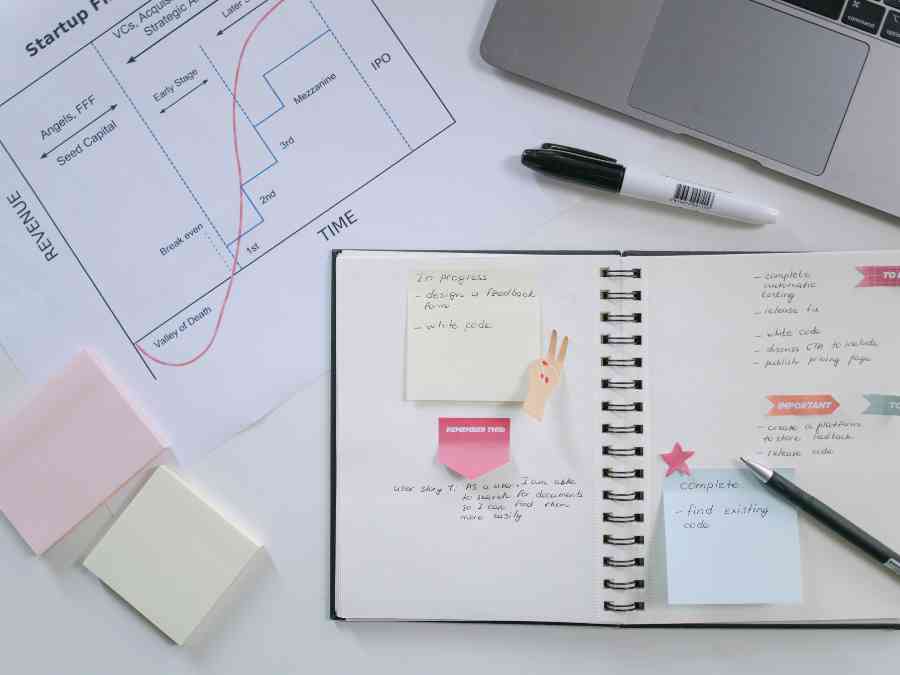
Make a catch-all “remember this” list, either in the notes app on your phone, or in a small notebook you keep with you (I love using actual pen and paper, anyone else?).
Set an alert on your phone if the thing you need to remember is time-sensitive, so it will remind you at the right time.
Put a reminder in your calendar if there are appointments or due dates that you rely on yourself to remember.
Talk it out. If you’re someone who likes to talk things through, find someone who will listen (without judgment) while you talk about all the clutter in your mind. This could be a therapist, a partner, a friend, or even yourself. That’s right, you can talk to yourself! (That doesn’t make you crazy, I promise.)
Record your random ideas in a notebook or notes app. Your brain is constantly trying to solve problems. Write down those ideas, instead of thinking, I’ve got to remember that! (Spoiler alert: you won’t remember it.)
Organize, sort, and plan
Turn your brain dump or your “remember this” list into a Master Task List. You can take those things you want to remember and turn them into easy, actionable steps. Read more about creating a Master Task List here.
Sort thoughts into clear categories (for instance, Things to do, Things to remember, Things to think about later, Things to let go of) and take action from there.
Use external systems to think for you – and trust them. Your tasks should go on your to-do list. Dates and deadlines can go in your calender. Ideas can go in a notebook. Set alarms or scheduled emails for reminders. Once you delegate those thoughts to those external systems, trust that they’ll do the thinking for you!
Make space for quiet
Practice doing one thing at a time. You don’t always need music or a podcast playing in the background. Let your mind breathe. For instance, when you’re, say, washing the dishes, just focus on that.
Do some meditation or yoga.
Turn your phone off at a certain time each night and do an activity that will help you unwind.
Go on a walk without your headphones. Just let your mind wander to whatever it wants to think about.
Do a calming mind task. Focusing your mind on a simple, repetitive task can help it calm down and sort out some of that clutter. Some of my favorite “mindless/mindful” tasks are coloring, tracing, or simple mind puzzles, like easy-level sudoku (I love the harder mind puzzles too, but not when I’m trying to relax my mind). This can also be something like knitting, playing an instrument, or anything else you can zone out and do without too much thought.
Prevent too much excess stuff from getting into your mind in the future
Limit scrolling on your phone. Scrolling makes your mind go 100 miles a minute. It’s overstimulation and you don’t need that.
Listen to podcasts and audiobooks on 1.0x speed (maaaaaybe 1.25x). Some of us have gotten into the habit of listening to things way faster than they need to be. Whenever I listen to something at 2.0x speed or more, it makes my mind feel impatient and frantic.
Close the extra tabs and windows on your phone or computer.
Do some digital decluttering. This will help you to mentally declutter a lot too!
Get enough sleep. Did you know that when you sleep, your brain files away information you learned during the day and deletes the stuff you don’t need anymore? That means if you don’t get enough quality sleep, your brain is going to feel more and more cluttered with the information it’s not getting a chance to file away.
Final thoughts
Clearing your mental clutter is not difficult. It just takes a little bit of time, but it is sooo worth the effort.
Just like that light, shiny feeling you get when you declutter the junk drawer in your kitchen, clearing the clutter in your brain will make you feel less stressed, more productive, and more ready to enjoy a life you love.
Try it out today!
Best of luck!